Autism
Autism, medically known as Autism Spectrum Disorder (ASD), is a neurodevelopmental condition that affects communication, social interaction, behavior, and sensory processing. It is called a spectrum because symptoms and severity vary widely from one child to another.
Autism is not a disease. It is a developmental difference. With early diagnosis, structured therapy, and supportive care, children with autism can grow, learn, and thrive.
What is Autism Spectrum Disorder (ASD)?
Autism Spectrum Disorder affects:
- Communication skills
- Social interaction
- Behavior patterns
- Sensory responses
- Learning and adaptive abilities
Symptoms usually appear before the age of 3 years, though early signs may be visible even in infancy.
Early Signs of Autism
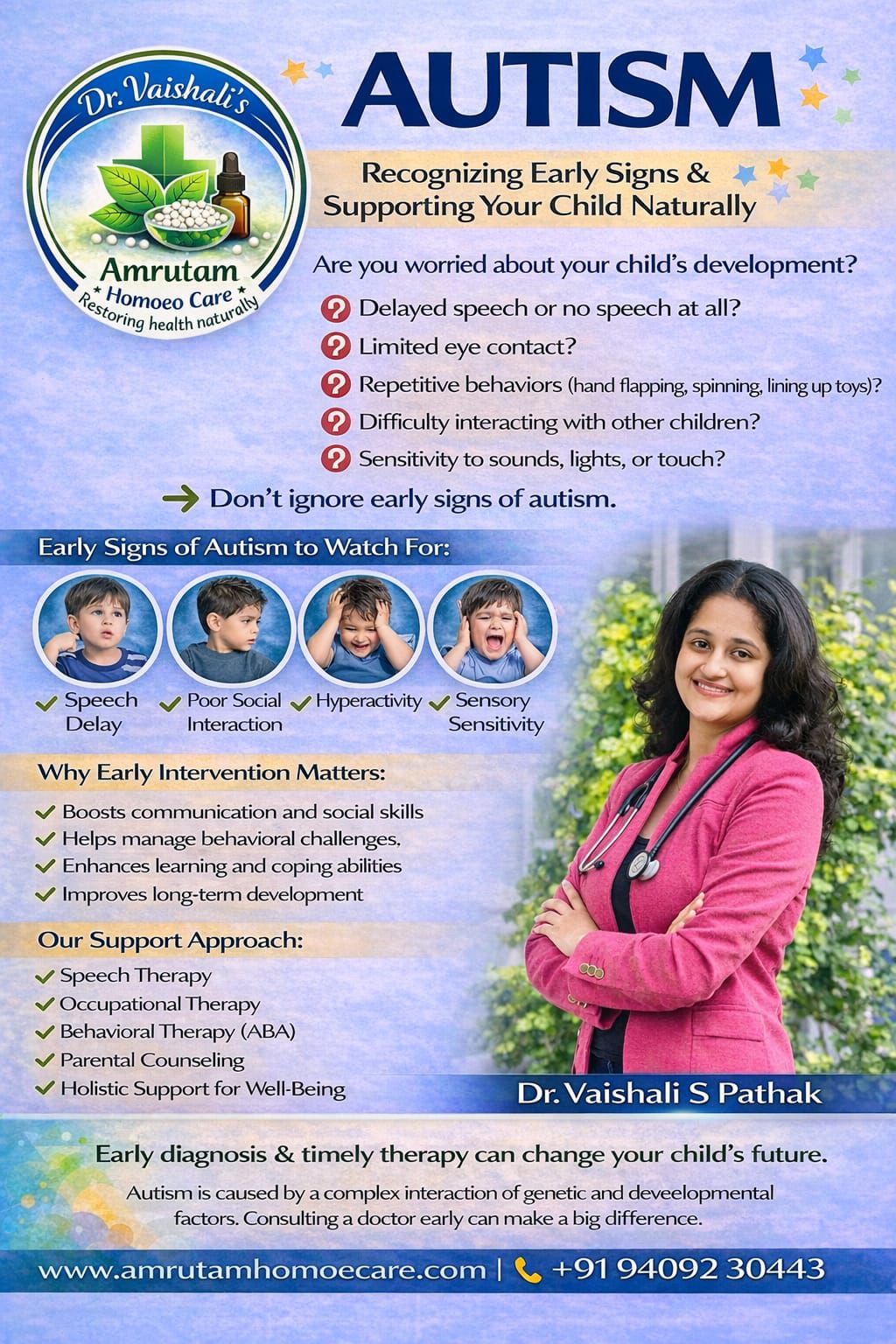
Signs in Infants (6–12 Months)
- Limited eye contact
- Rarely smiles back
- Does not respond to name consistently
- Reduced babbling
- Less social engagement
Signs in Toddlers (1–3 Years)
- Delayed speech or absence of speech
- Does not point or wave
- Limited imitation of gestures
- Prefers to play alone
- Repetitive movements like hand flapping or rocking
Signs in Older Children
- Difficulty making friends
- Trouble understanding emotions
- Strong resistance to routine changes
- Intense focus on specific interests
- Difficulty maintaining conversations
Common Symptoms of Autism
Communication Difficulties
- Delayed language development
- Echolalia (repeating words)
- Limited conversation skills
- Unusual tone or rhythm of speech
Social Interaction Challenges
- Limited eye contact
- Difficulty understanding social cues
- Reduced interest in peer relationships
- Challenges expressing emotions
Repetitive Behaviors
- Hand flapping
- Spinning objects
- Lining up toys
- Rigid adherence to routines
Sensory Sensitivities
- Over-sensitivity to sound or light
- Avoidance of certain textures
- Strong reactions to smells
- Seeking sensory stimulation
Causes of Autism
Autism develops due to a complex interaction of genetic and developmental factors. It is not caused by parenting style or vaccines.
Genetic Factors
Research suggests certain genes may increase susceptibility.
Brain Development Differences
Differences in brain connectivity and structure may influence behavior and communication.
Environmental Influences
Some prenatal and perinatal factors may play a role.
Why Early Intervention Matters
- Improves communication and language skills
- Enhances social development
- Helps manage behavioral challenges
- Supports learning and independence
- Improves long-term developmental outcomes
Management and Support Approach
Speech Therapy
Improves verbal and non-verbal communication abilities.
Occupational Therapy
Supports sensory integration and daily life skills.
Behavioral Therapy (ABA)
Helps develop positive behaviors and reduce challenges.
Parental Counseling
Guides parents in supporting their child effectively at home.
Homeopathic Care for Autism
- Supports emotional balance
- Helps improve focus and concentration
- May assist in reducing hyperactivity
- Supports sleep regulation
- Works alongside conventional therapies
- Gentle and individualized approach
Why Choose Homeopathy for Autism Support?
- Individualized treatment approach
- Focus on overall well-being
- Non-addictive management
- Can be integrated with other therapies
- Holistic support for child development
When Should You Consult a Doctor?
- Child not speaking by 2 years
- Loss of previously acquired skills
- Limited social interaction
- Behavior affecting daily functioning
Contact Us
- Clinic: Dr. Vaishali’s Amrutam Homoeo Care
- Doctor: Dr. Vaishali S Pathak
- Website: www.amrutamhomoeocare.com
- Phone: +91 94092 30443
- Early diagnosis & timely therapy can change your child’s future.
Restoring health naturally with compassionate care.
