
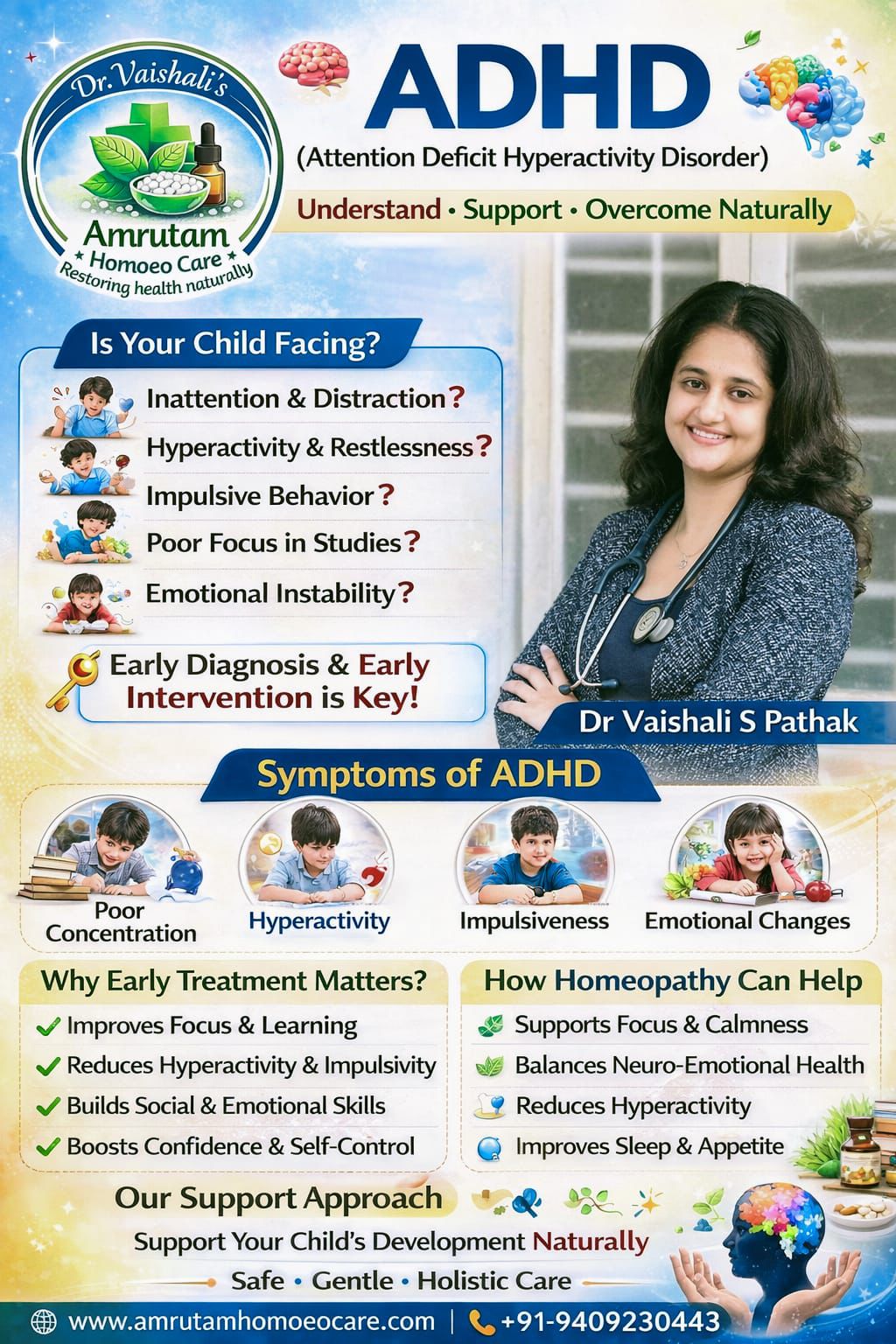
ADHD (Attention Deficit Hyperactivity Disorder)
Attention Deficit Hyperactivity Disorder (ADHD) is a common neurodevelopmental condition that affects children, adolescents, and sometimes adults. It primarily impacts attention span, impulse control, emotional regulation, and activity levels.
Children with ADHD often struggle with maintaining focus, controlling impulses, and regulating their behavior appropriately for their age. However, with early identification, structured therapy, parental guidance, and comprehensive care, children with ADHD can thrive academically, socially, and emotionally.
ADHD is not caused by poor parenting, lack of discipline, or laziness. It is a medically recognized developmental condition involving differences in brain function and regulation.
Understanding ADHD
ADHD is characterized by persistent patterns of:
- Inattention
- Hyperactivity
- Impulsivity
For a diagnosis, these symptoms must:
- Be present for at least 6 months
- Appear before 12 years of age
- Occur in more than one setting (home, school, social situations)
- Interfere with academic, social, or daily functioning
Types of ADHD
1. Predominantly Inattentive Type
Children mainly struggle with attention and focus without significant hyperactivity.
2. Predominantly Hyperactive-Impulsive Type
Marked by excessive activity levels and impulsive behaviors.
3. Combined Type
Includes both inattentive and hyperactive-impulsive symptoms. This is the most common presentation.
Detailed Symptoms of ADHD
Inattention Symptoms
- Difficulty sustaining attention in tasks or play activities
- Frequently makes careless mistakes in schoolwork
- Appears not to listen when spoken to directly
- Difficulty organizing tasks and activities
- Avoids tasks requiring sustained mental effort
- Loses school materials frequently
- Easily distracted by external stimuli
- Forgetful in daily routines
Hyperactivity Symptoms
- Constant fidgeting or squirming
- Difficulty remaining seated
- Runs or climbs excessively in inappropriate situations
- Unable to engage quietly in activities
- Acts as if “driven by a motor”
- Talks excessively
Impulsivity Symptoms
- Blurts out answers before questions are completed
- Difficulty waiting for their turn
- Interrupts or intrudes on others
- Emotional outbursts or sudden mood shifts
- Acts without thinking about consequences
Causes and Risk Factors
ADHD develops due to a combination of biological and environmental influences.
Genetic Factors
Research shows ADHD often runs in families, suggesting a strong hereditary component.
Neurological Differences
Brain imaging studies indicate differences in areas responsible for attention, executive function, and impulse control. Neurotransmitter regulation (especially dopamine) may play a role.
Environmental Influences
- Premature birth
- Low birth weight
- Prenatal exposure to toxins
- Early developmental stressors
Importantly, ADHD is not caused by parenting style or excessive screen time alone.
Impact of ADHD on a Child’s Life
Academic Challenges
Children may struggle with completing assignments, maintaining focus during lessons, and performing consistently in exams.
Social Difficulties
Impulsive behavior may affect friendships and peer relationships.
Emotional Concerns
Repeated academic or behavioral difficulties may lead to low self-esteem, frustration, or anxiety.
Why Early Diagnosis and Intervention Matter
- Improves academic performance
- Enhances behavioral control
- Builds social confidence
- Prevents secondary emotional issues
- Strengthens parent-child relationships
Early structured support significantly improves long-term outcomes.
Comprehensive Management Approach
Behavioral Therapy
Helps children develop coping skills, self-regulation strategies, and positive behavior patterns.
Parent Training and Guidance
Parents learn structured techniques to manage behavior effectively and consistently.
Educational Interventions
Individualized educational plans (IEP) and classroom accommodations can improve academic success.
Counselling and Emotional Support
Supports emotional regulation, builds confidence, and reduces frustration.
Medical Management
In some cases, doctors may recommend medication as part of a structured treatment plan.
Homeopathic Care for ADHD Support
Homeopathy follows an individualized and holistic approach. It aims to support overall well-being and emotional balance alongside recommended therapies.
- Supports focus and concentration
- May help reduce restlessness
- Supports emotional stability
- Helps improve sleep patterns
- Encourages balanced neuro-emotional functioning
- Individualized remedy selection based on child’s personality and symptoms
Homeopathic care can be integrated with behavioral therapy and educational support for a comprehensive approach.
When Should Parents Seek Professional Help?
- Persistent difficulty concentrating
- Hyperactivity affecting school performance
- Frequent impulsive actions
- Emotional instability or frequent mood swings
- Difficulty maintaining friendships
If symptoms interfere with daily functioning, early evaluation is recommended.
Contact Us
- Clinic: Dr. Vaishali’s Amrutam Homoeo Care
- Doctor: Dr Vaishali S Pathak
- Website: www.amrutamhomoeocare.com
- Phone: +91-9409230443
- Early diagnosis and timely support can transform a child’s future.
Restoring health naturally with compassionate and individualized care.

The content is spectacular, very authentic and real .